




Every month, when Toronto’s latest real estate statistics are released, I ask myself one simple question:
What is the market trying to tell us?
Sometimes the answer is obvious.
Sometimes it’s buried beneath the headlines.
This month, I think the message is surprisingly clear.
Toronto’s real estate market isn’t suddenly heating up—but it is tightening.
That distinction matters.
For much of the past year, buyers have enjoyed something they hadn’t experienced in quite some time: choice.
There were more listings to consider, more negotiating power, and more time to make decisions.
Those conditions haven’t disappeared overnight.
But June’s numbers suggest they may be starting to change.
The Story Isn’t Sales. It’s Supply.
Most people focus on how many homes sold.
I spend just as much time watching how many new homes come to market.
Why? Because that’s where market conditions begin to change.
Across almost every major housing segment in Toronto, new listings declined again in June while sales increased.
The sales-to-new-listings ratio climbed from 31% to 39%.
Inventory continues to be absorbed.
When demand remains relatively steady while supply continues to shrink, pricing pressure almost always follows.
That doesn’t mean we’re heading back to the frenzy markets of 2021.
But it does suggest the buyer-friendly conditions we’ve seen over the past several months may not last indefinitely.
I’ve Started Seeing It During Showings
The statistics are one thing. Watching them play out in real life is another.
Recently, I was helping buyers in Port Credit and we viewed a home that reminded me almost immediately of another property they had loved about six months earlier.
Same neighbourhood. Very similar lot. Comparable finishes. Nearly identical overall appeal.
The difference? This home sold for roughly $150,000 more.
Nothing dramatic had happened between those two sales.
The market simply continued moving while many buyers were still making decisions based on where prices had been instead of where they were going.
That’s why I’ve been encouraging buyers not to anchor today’s decisions to yesterday’s market.
Markets rarely change all at once.
They evolve gradually—until one day everyone realizes they’ve already shifted.
Every Segment Is Telling A Similar Story
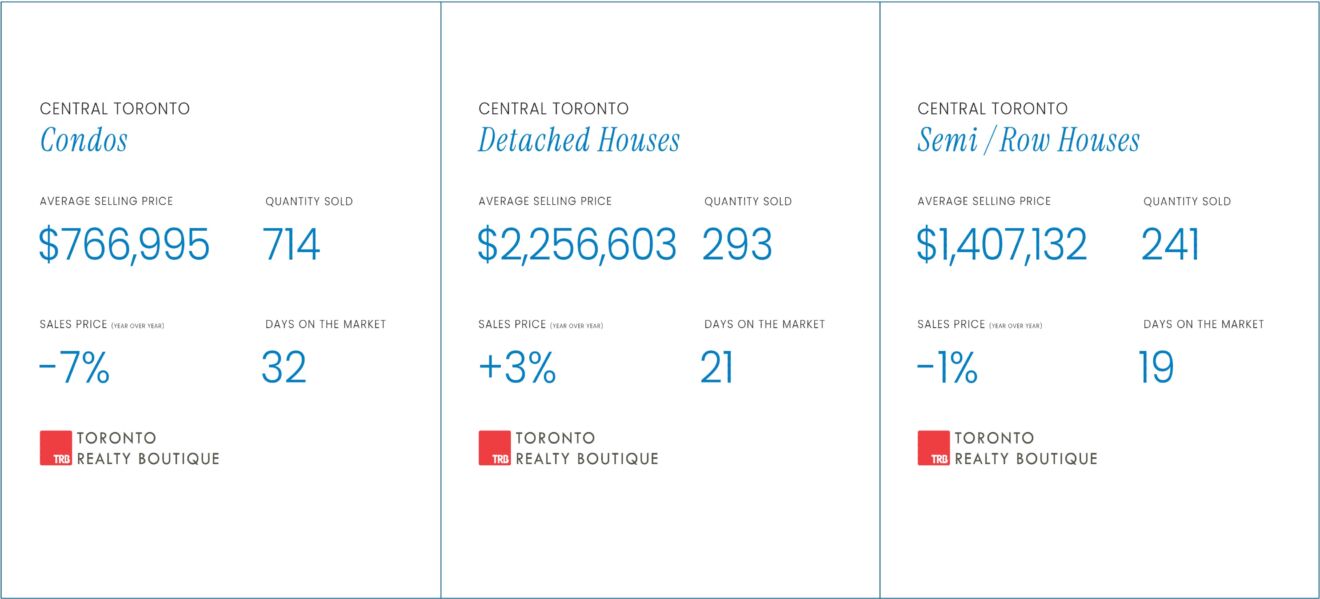
One thing I appreciate about Toronto’s market is that it rarely moves as one.
Every property type tells a slightly different story. Yet this month, they all point in the same direction.
Condominiums
Condo prices remain below last year’s levels, but the underlying fundamentals continue to improve.
New listings declined nearly 19%.
Sales increased more than 8%.
Inventory continues to be absorbed month after month.
One trend I’ve been watching particularly closely is the demand for larger suites.
Two-bedroom plus den and three-bedroom condominiums have quietly become one of the strongest segments of the market, driven primarily by end-users rather than investors.
Recently, while touring properties with downsizing clients relocating from Barrie, I was genuinely impressed by the quality of inventory available across Toronto.
From The Well to Yorkville to the Shangri-La, there are some exceptional opportunities for buyers looking for space, lifestyle, and long-term ownership.
Detached Homes
Detached homes continue to demonstrate remarkable stability.
Prices remain above last year’s levels.
Sales have held steady.
New listings haven’t increased meaningfully.
The statistic that stood out to me most wasn’t pricing—it was how quickly homes are selling.
Days on market have improved by roughly 28% compared to last year.
That tells me buyers aren’t necessarily becoming more plentiful.
They’re becoming more decisive.
Semi-Detached & Row Homes
This remains, in my opinion, the most fascinating segment of Toronto real estate.
New listings are now down 75% compared to last year.
There is currently only about 1.8 months of inventory available.
That’s firmly within seller’s market territory.
What’s interesting is that the market has remained remarkably patient despite those conditions.
I’m not convinced that continues through the second half of the year.
Inventory May Matter More Than Interest Rates
Interest rates continue to dominate real estate conversations.
The Bank of Canada held its overnight rate again this month, and its latest Monetary Policy Report points toward inflation returning to its 2% target through 2027.
To me, that’s less a story about future rate cuts and more a story about stability.
While many buyers continue waiting for significant changes in borrowing costs, I think they’re paying less attention to something that may have a greater impact on their next purchase:
Inventory.
Mortgage rates influence affordability.
Inventory influences competition.
And right now, inventory is quietly moving in one direction.
Down.
My Take
I don’t believe Toronto’s market is suddenly becoming overheated.
I also don’t believe buyers should feel pressured into making rushed decisions.
But I do think the environment is changing.
The opportunities that existed earlier this year are still there—but they’re becoming more selective.
Preparation is becoming more valuable than patience.
The buyers who know exactly what they’re looking for, understand their budget, and are ready to act when the right property appears will continue to have an advantage.
Because markets don’t usually change overnight.
They change quietly.
Then one day everyone realizes they’ve already changed.
Personally, I think June may be one of those months we’ll look back on as an early signal—not because prices suddenly surged, but because the balance between buyers and sellers began shifting once again.
Recommended Reading
Many Toronto Buyers Are Still Acting Like It’s January
Most Homeowners Are Asking the Wrong Question
Why Some Toronto Condos Still Sell Instantly While Others Sit for Months

TRB Education Hub
Get the real estate resources you need to succeed. Visit our education hub for market insights, guides, podcasts and more.