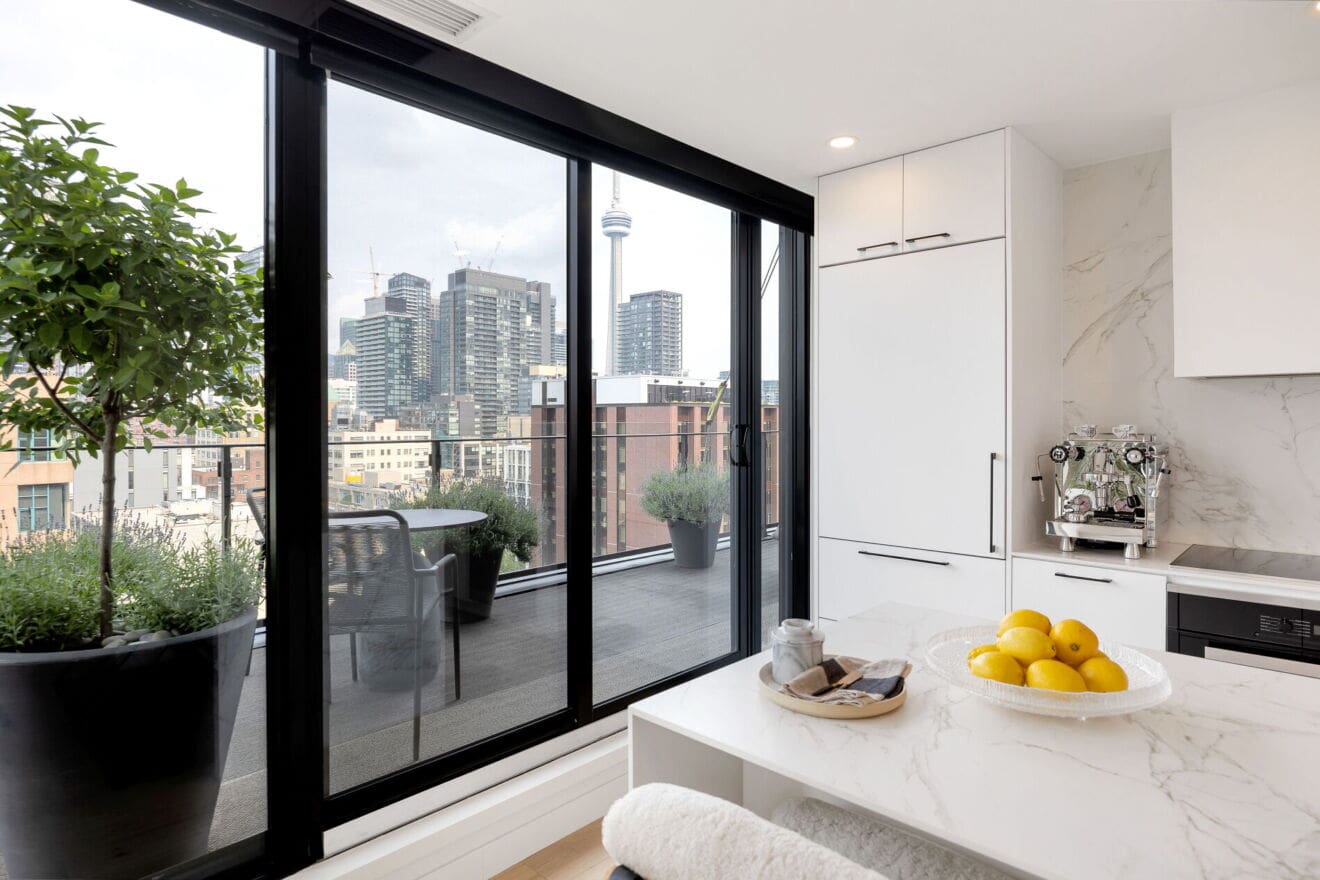




One of the first calculations people make when comparing Toronto condos is price per square foot.
It’s useful. I use it all the time. But I’ve also walked into condos that looked inexpensive on paper and immediately felt overpriced.
And I’ve walked into others with a higher price per square foot that felt like much better value.
Why? Because buyers don’t actually experience a condo in price per square foot.
They experience the space.
They notice whether the living room works. Whether there’s somewhere to put a dining table. Whether the bedroom fits more than a bed. Whether there’s natural light. Whether there’s storage. Whether the building feels well run.
And whether 700 square feet somehow feels like 700 square feet—or 550.
That’s why I think some of the most important things determining condo value never show up in the price-per-square-foot calculation.
Not All Square Footage Is Created Equal
This is probably the biggest mistake I see buyers make when comparing condos.
A 700-square-foot condo isn’t automatically better value than a 600-square-foot condo simply because you’re getting another 100 square feet.
The question is: Where are those 100 square feet?
I’ve seen condos waste enormous amounts of space on long hallways, awkward entrances, oversized mechanical areas and rooms that are difficult to furnish.
I’ve also seen extremely efficient floor plans where almost every square foot is usable.
The difference can be remarkable.
A well-designed 600-square-foot condo can easily live better than a poorly designed 700-square-foot one.
That’s why I care much more about usable space than the number printed on the listing.
Layout Can Be More Valuable Than Size
This becomes particularly obvious when you start furnishing a condo in your head.
Where does the sofa go? Where does the television go? Can you fit a dining table without blocking the walkway? Does the bedroom have two usable walls, or is half the room taken up by doors? Can the den actually function as an office?
These sound like small details until you live with them every day.
A strange angle or badly positioned door can make a surprisingly large amount of square footage essentially useless.
And that’s where a condo that looked inexpensive starts to feel expensive.
You’re paying for space you can’t really use.
Natural Light Changes Everything
Exposure is another characteristic I think buyers sometimes underestimate when they’re comparing listings online.
Two identical floor plans on opposite sides of the same building can feel completely different.
Natural light can make a smaller condo feel larger.
A great exposure can create privacy.
An open view can change the entire experience of a room.
And conversely, a larger condo facing directly into another building can feel surprisingly constrained.
This doesn’t mean south-facing is always better or that every condo needs a spectacular view.
But light, exposure and what’s outside your windows are part of what you’re buying.
And unlike flooring or kitchen cabinets, they’re generally not things you can change later.
Ceiling Height Has An Outsized Impact
This is another one that doesn’t get enough attention.
An extra foot of ceiling height doesn’t add anything to the advertised square footage.
But it can dramatically change how a condo feels.
Higher ceilings create volume.
They improve sightlines.
They can make windows feel larger and rooms feel more substantial.
It’s one reason some lofts and well-designed condos can command premiums that don’t make immediate sense when you’re looking only at size.
You’re not getting more floor area.
You’re getting a different experience of the space.
Storage Is Part Of The Floor Plan
One of the fastest ways for a condo to start feeling too small is when there isn’t anywhere to put anything.
Coats. Shoes. Vacuum cleaner. Luggage. Linens. Cleaning supplies.
All the things that somehow disappear from listing photos but need somewhere to live once you move in.
Good storage allows the rest of the condo to function properly. Poor storage forces your living space to do double duty.
This is particularly important in smaller condos, where one properly designed closet can sometimes be more useful than another 20 or 30 square feet of open floor area.
Then There’s The Building
This is where evaluating condo value gets more complicated. You’re not just buying the unit. You’re buying into the building.
- How does the lobby feel?
- How long are you waiting for an elevator?
- Are the hallways maintained?
- How are deliveries handled?
- Are the amenities useful or are you paying for things you’ll never use?
- How well is the corporation managed?
- What are the maintenance fees actually providing?
- Does the building have a reputation buyers recognize?
These things influence how a condo feels to own—and how easy it may eventually be to sell.
A unit can be beautiful and still be compromised by the building around it.
The opposite is also true.
A very well-run, desirable building can add significant value to an otherwise fairly ordinary suite.
Maintenance Fees Need Context
Buyers understandably pay close attention to condo fees. They should. But I don’t think the lowest maintenance fee automatically represents the best value.
I’d rather understand what you’re getting for the money.
Do the fees include utilities? Does the building have expensive amenities? Is there a concierge? How large is the building? How well maintained are the common areas? What does the reserve fund look like?
A higher fee in a well-managed building that provides meaningful services may be perfectly reasonable.
A lower fee isn’t particularly helpful if the building is underfunded or important expenses are being deferred.
The number matters. The context matters more.
The Cheapest Condo Isn’t Always The Best Value
This is ultimately why I think buyers need to be careful when sorting listings by price or price per square foot.
Sometimes the cheaper condo really is the better purchase.
Sometimes it isn’t.
A slightly more expensive property might give you:
- A much better floor plan.
- More natural light.
- A better exposure.
- Higher ceilings.
- Useful storage.
- A stronger building.
- Lower future resale objections.
Those things may be worth paying for. The important part is understanding why you’re paying the premium.
My Take
Price per square foot is a useful comparison tool.
It just isn’t a verdict.
When I’m evaluating a Toronto condo, I want to know what the numbers say.
Then I want to walk through the front door and see whether the numbers make sense.
How efficiently does the space work? How does it feel? What’s permanent? What will buyers value today? And what is the next buyer likely to value when we eventually sell it?
Because the best-value condo isn’t necessarily the one with the lowest price per square foot.
It’s the one where the space, the building and the price make sense together.
Recommended Reading
Why Some Toronto Condos Still Sell Instantly While Others Sit for Months
Many Toronto Buyers Are Still Acting Like It’s January

TRB Education Hub
Get the real estate resources you need to succeed. Visit our education hub for market insights, guides, podcasts and more.